


11 Jul The chip you can’t see
Lessons on prevention from Jeremy Clarkson’s heart scare
Most of us have experienced that annoying moment. We are driving along and then bang!, we hear a stone hit our windscreen and see that chip in. We then see it every time we drive. Wisdom tells us that fixing it is a sensible idea to prevent further damage and keep us safely on the road. Our insurance company will even pay for it to be fixed. We may stay in denial, for a while, but in the end most of us arrange for it to be fixed.

Coronary artery disease is not the same, you can’t see the chip or that early sign. We can be at risk, we can be told by our doctors or pharmacists that we are at risk and should change our ways or take statins. We don’t know if we have a problem unless we see it. Because we don’t know for sure and feel well, we carry on regardless with our busy lives.
Let’s take Jeremy Clarkson, who’s openness about his health may go on to save many lives. First the coronary scare in 2024, then the prostate cancer in 2025. He has championed the early detection and screening of prostate disease.

Jeremy described how in 2024 he had felt chest pain and on exertion, then pins and needles in his left arm. This worried him and prompted him to think “Hang on, am I having a heart problem?” he went hospital as soon as possible and most probably had a cardiac CT scan “They put me in this big polo mint and they found out I have got really bad coronary heart problems”. He avoided a heart attack but did describe in detail the severe blockages found in 3 out of 3 of his heart arteries, his own words describe his understanding well “So you’ve got arteries that feed your heart with blood to keep it pumping, one of them totally blocked, one of them looked like something dangling from the roof of a cave in the Peak District and one of them got so clogged up, it had to form what looked like branches, so my heart wasn’t getting any blood.” subsequently two arteries were treated with stents and he is now well.

In the Amazon series Clarksons Farm 5 he opened up. “I’m back and not dead,” he told Kaleb Cooper, adding: “The grim reaper will have to wait. It was f***ing close, though.” This shows a positive approach to recovery. His chat on camera with the show’s builder Alan Townsend, who coincidentally was in the same hospital as Jeremy at the same time having a coronary bypass, about coronary disease was a touching moment of common humanity.
This level of blockages did not happen overnight and to use the windscreen analogy he had massive cracks by the time he sought help. The question after the event is often could this have been picked up earlier? Could this have been avoided?
When I ask patients on the coronary care days after their heart attack if they were aware of any specific tests that they could have had to predict and maybe prevent their event, almost always they say no. Asked if they could go back in time and have a test to help avoid the heart attack, the answer is often a resounding yes.
CT scans can see the chip in your windscreen. Even the very basic CT chest scans used to detect lung cancer by the NHS can find plaque. These scans are offered free to most adults aged 55-74 who are current or ex-smoker. These scans can detect calcium in the coronary arteries. High levels of calcium means high levels of plaque. Knowing this can prompt treatment and lead to a referral to a cardiologist. We can only speculate whether such a scan would have helped Jeremy, but at 66 years of age, if he was registered with an NHS GP this would have been on offer.

Basic lung cancer screening CT scan – white calcium in plaque
More advance CT scans using contrast injections to see inside the arteries, CT coronary angiograms (CTCA) can detect plaque more accurately and are the best tests currently available to predict heart attack risk. For patients with chest pain these scans been shown to provide valuable information to guide treatment that leads to sustained reduction in coronary events over 10 years (SCOTHEART trial) and it is the first line NHS test for chest pain or angina. For patients with no symptoms the data on benefit is not there yet, the trials are ongoing this is why the CTCA is not yet part of a national screening programme.

CT coronary angiogram CTCA image showing soft non calcified plaque
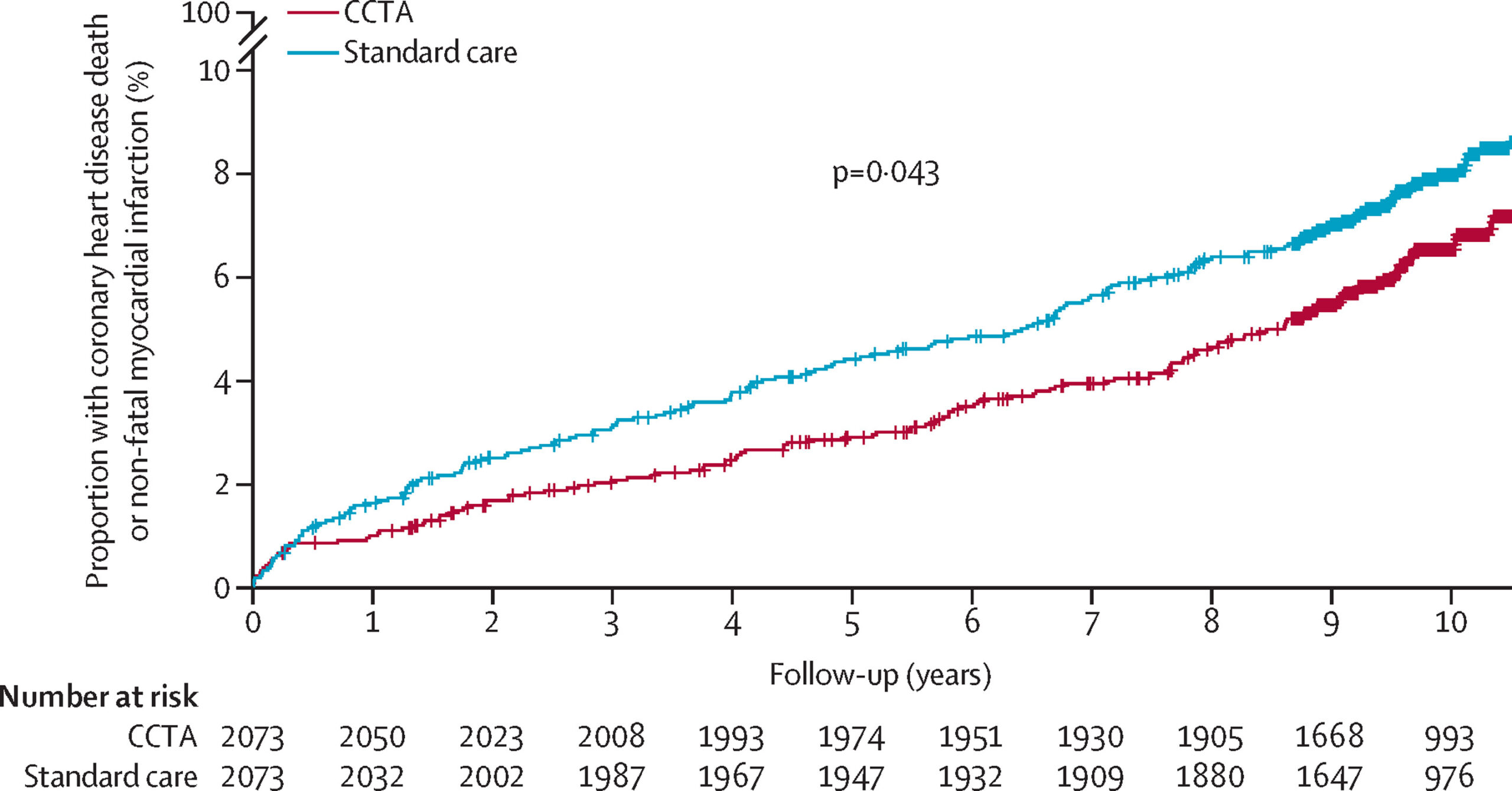
10-year death and heart attack in SCOTHEART trial – red line CT patients
If you want your own windscreen thoroughly checked so to speak, a preventative cardiologist can offer an expert review and request a CT coronary angiogram if it’s right for you to help inform and personalise your prevention plan. The scans are usually only requested for people aged 40 or over with a family history of coronary disease or other risk factors.
A classic Top Gear line would be “Some say contact reception to avoid an early checkout” i.e. finding the chip can avoid that crack. If you are worried about the risks of coronary artery disease for you, a friend or a relative then have a think. There is a way of finding a chip. If you’d like to talk through whether a scan is right for you please contact us, or any other reputable preventative cardiologist.
Sorry, the comment form is closed at this time.